
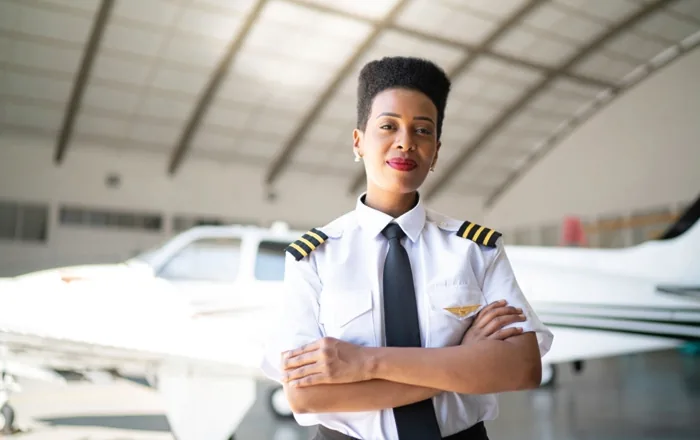
A national carrier that flies with borrowed crews is only half a national carrier. The cadet programme exists so that the second half arrives on schedule.
The premise is simple. There is no shortage of Sierra Leoneans who want to fly. There is a shortage of routes into the profession that do not begin with a family able to fund a licence abroad. The programme is an attempt to remove that as the deciding factor.
Selection
Candidates sit aptitude testing before anything else, because the things that make a good pilot are testable and are not the same as the things that make a good interview. Spatial reasoning, working memory under load, the ability to keep scanning when something has already gone wrong. Academic background matters, but it is not the first filter.
Those who progress go to a medical, then to a structured interview that is as much about temperament as ability. The cockpit is a small room. How someone behaves in it when tired and outranked is not a detail.
Ground school and beyond
Ground school covers the theory: principles of flight, meteorology, navigation, air law, human performance. It is genuinely difficult, and it is meant to be. Flight training follows, building from single-engine hours through instrument rating to multi-engine and, eventually, a type rating on the aircraft the airline actually operates.
Cadets who complete the programme join the airline as first officers. The intention is that within a decade a meaningful share of the flight deck is homegrown, and that the phrase national carrier means something on the crew list as well as on the tail.